Grease Trap Cleaning in Atlanta, GA
Backed-up grease trap, inspection coming up, or routine pumping due? Speak with a service provider serving Atlanta to discuss pricing, check availability, and book your service.
Call to Book Service(877) 704-1271Your call connects you with an independent service provider. Confirm pricing and book directly with them.
- Indoor grease traps and in-ground interceptors
- Routine pumping, backups, and inspection preparation
- Restaurants, schools, hotels, hospitals, and food plants
Book by Phone
Call about an urgent issue or schedule your next pumping.
Call to Book(877) 704-1271- 1Enter your ZIP code Follow the phone prompt to reach a company serving your area.
- 2Describe what you need Explain the problem or the service you want to schedule.
- 3Confirm and book Ask about pricing, what is included, and the next available appointment.
Which situation are you in?
Need help now or planning your next service? Choose the situation that matches your kitchen.
Backed up or overflowing
A full trap stops separating grease, and water backs up through the floor drain or sink. Before the provider arrives:
- Stop grease going down drains. Scrape plates and pans into the trash and keep fryer oil out of every sink.
- Shut off fixtures that feed the trap. Pause dishwashers, prep sinks and mop sinks connected to it so it does not overflow further.
- Keep staff away from the overflow. Grease water is slippery and unsanitary. Block off the area and keep food and clean equipment clear.
- Photograph the trap and find the last pumping date. Providers and inspectors both ask for it.
Smell or slow drains
A sour smell near the floor drain, or sinks that drain slowly after the lunch rush, usually means the trap is getting full. Atlanta's 25 Percent Rule keeps grease and oil, floating and settled, below a quarter of the trap's operating depth, so don't wait for the overflow.
Call About Odors or Slow DrainsInspection due or notice received
Atlanta inspectors can check your grease trap manifests without notice, and a trap that fails has to be cleaned within three days. If your last pump-out is overdue, book it before the visit and keep the manifest with your records.
Call About an Inspection DeadlineRoutine schedule, new opening, or several locations
Opening a kitchen in Atlanta? You need a grease permit before the city issues a business license, and existing traps need field verification before plan approval. Already open? A standing schedule keeps you inside the 90-day outdoor and 14-day indoor limits.
Call to Schedule PumpingGrease trap and interceptor services
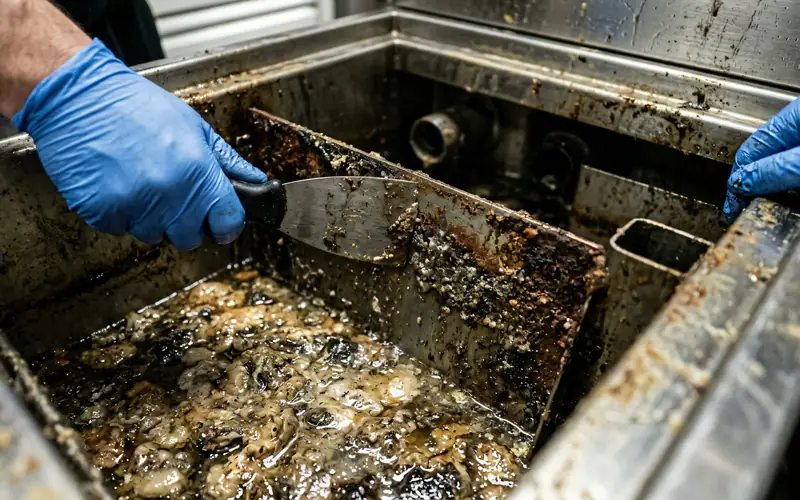 Indoor trapsGrease Trap CleaningScraping walls and baffles, clearing solids and the inlet and outlet, beyond a basic pump-out.Learn about cleaning →
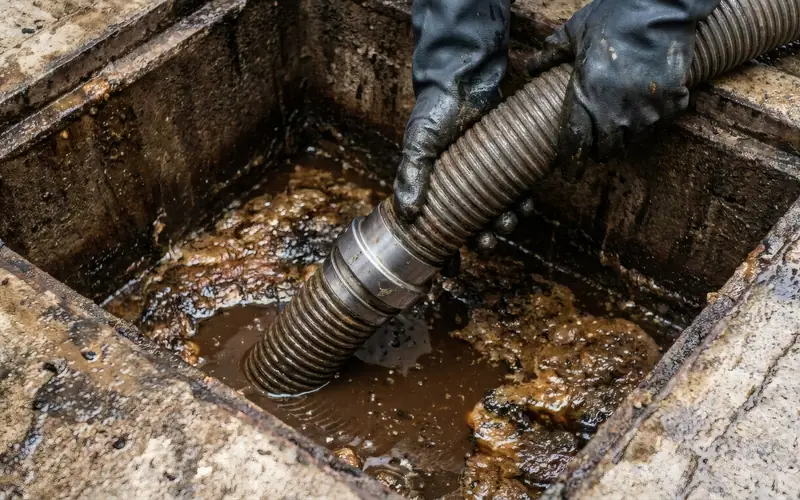 Indoor trapsGrease Trap PumpingRoutine pump-outs that keep your trap under fullness limits and your records current.Learn about pumping →
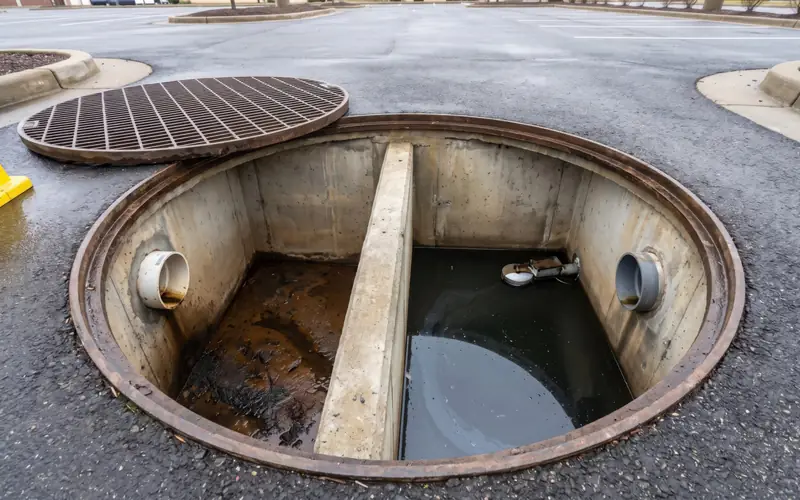 In-ground interceptorsGrease Interceptor CleaningJetting, solids removal and a check of tees, baffles and lids on large outdoor tanks.Learn about interceptor cleaning →
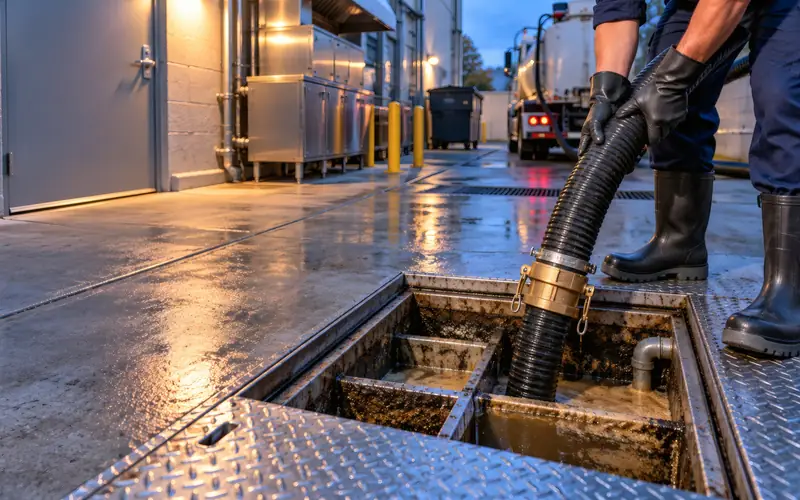 In-ground interceptorsGrease Interceptor PumpingVacuum truck pump-outs on a regular schedule, with records for your inspector.Learn about interceptor pumping →
Who uses this service
Any kitchen with a fryer, grill or dishwasher sends grease to a trap or interceptor.
- Restaurants and cafes
- Fast food
- School and university cafeterias
- Hotels
- Hospitals and care homes
- Food processing plants
- Grocery delis and bakeries
- Caterers and commissaries
Ready to Book Grease Trap Cleaning?
Discuss your kitchen’s needs, confirm pricing, and book an available appointment.
Atlanta grease trap rules at a glance
A plain-language summary. Always confirm current requirements with the local authority before relying on them.
Who regulates
The City of Atlanta Department of Watershed Management runs the Grease Management Program for food service facilities that discharge into the city's wastewater collection system.
Permit first
Every food service facility must apply for a grease permit, pay the permit fee and be available for inspections. The fee starts at $300 for 0 to 5 grease traps.
How often
City Code sets the outer limits: outdoor grease traps at least once every 90 days and indoor traps at least once every 14 days, or sooner if your permit says so.
The 25 Percent Rule
Grease and oil, floating and settled together, must stay below 25 percent of the trap's operating depth.
What a full service includes
Each service pumps out the full contents, solids and sludge included. For outdoor traps, top skimming, decanting or back flushing to cut the hauled volume is prohibited, and enzymes or other additives cannot stand in for maintenance.
Records and inspections
Keep the service manifests on site for three years and send them in with your annual permit renewal. A trap that fails inspection has to be cleaned within three days, and a facility that fails an inspection is charged $100 for each trap.
Not sure where your kitchen stands?
Call with your last pumping date and ask what your log should show. Pricing is confirmed before work starts.
Call (877) 704-1271Sources: City of Atlanta Department of Watershed Management, Grease Management · Atlanta City Code Sec. 154-297.03 (Municode)
Grease trap or grease interceptor?
You do not need to know which you have before calling, but this helps you describe it.
- Location
- Indoors, under a sink or set in the kitchen floor
- Flow rating
- Roughly 20 to 100 gallons per minute
- Which kitchens
- Cafes, small restaurants, bars, coffee shops
- Typical pumping interval
- Every 1 to 4 weeks for most busy kitchens
- Location
- Outdoors, buried below a parking lot or yard
- Typical size
- Roughly 500 to several thousand gallons
- Which kitchens
- High-volume restaurants, schools, hospitals, food plants
- Typical pumping interval
- Every 1 to 3 months, depending on volume and local rules
What Affects Grease Trap Cleaning Cost?
The price depends on the unit and the work required. When you call, describe your setup and ask what the quote includes.
Size and number of units
Your trap or interceptor’s capacity, if known, and how many units need service.
Current condition
When it was last pumped and whether you have a backup, odors, or slow drainage.
Access and scheduling
Where the unit is located, access restrictions, and your preferred service time.
Disposal and additional work
Whether disposal, service records, and any additional cleaning are included in the price.
Not sure what size unit you have? You can still call. Describe its location and the issue you are having.
Questions to ask before you hire a pumper
Before you book, ask what the service includes, which records you will receive, and whether any additional charges may apply.
- 1Are you a permitted grease waste hauler?Many local authorities require haulers to hold a specific permit for grease waste.
- 2Will I get a disposal manifest?The manifest shows where the waste was taken. Keep it with your records.
- 3Is it a full pump-out or skimming?Skimming leaves settled solids behind. Ask for the full contents to be removed.
- 4Do you check baffles and the outlet?Broken baffles or a missing outlet tee let grease pass straight through.
- 5Can we set a regular schedule?A standing schedule keeps you under fullness limits without having to remember.
- 6Will you fill in my cleaning log?Atlanta requires manifests showing the date, the amount removed, the disposal site and the hauler, kept on site for three years.
What to Have Ready When You Call
A few details can help the service provider assess your needs and discuss the right appointment.
- Your service address and ZIP code.
- Whether you have an indoor grease trap or an outdoor interceptor.
- The unit’s size, if known.
- Approximately when it was last pumped.
- Any backup, odors, slow drainage, or inspection deadline.
- The number of units or locations needing service.
Share what you know. You do not need every detail before calling.
What’s different about grease traps in Atlanta, GA
Atlanta built its Grease Management Program because grease from restaurants, schools, nursing homes and other food service establishments contributes to more than half of the blockages and overflows in the city's wastewater collection system. Every food service facility on that system needs a grease permit, pays the permit fee and has to be available for inspections.
The intervals are short. Outdoor grease traps must be maintained at least once every 90 days, and indoor traps at least once every 14 days, unless the permit sets something shorter. For a new restaurant, City Code calls for grease traps with a capacity of at least two 1,500 gallon traps in series.
Three days to fix a failed trap
When a trap fails an Atlanta inspection, the owner is told to have it cleaned out within three days. A facility that fails a grease trap inspection is also charged $100 for each trap.
Manifests stay on site
Service records have to stay at your location for three years, open to inspection without notice, and they go in with the annual permit renewal. Ask the provider for the manifest at every visit.
Small sewers, more visits
Some food service establishments in parts of the city served by small diameter public sewers, 8, 10 and 12 inch lines, are inspected at least three times a year.
Sources: City of Atlanta Department of Watershed Management, Grease Management · City of Atlanta Code of Ordinances, Sec. 154-297.03
Service area
Areas served in Atlanta
- Buckhead
- Westside Provisions District
- Atlantic Station
- Downtown
- Midtown
- Little Five Points
- Eastside food halls
Frequently Asked Questions
How often should a grease trap be cleaned?
Cleaning frequency depends on your kitchen’s wastewater volume, menu, grease production and the type of trap you have. Local requirements may also apply. A service provider can help you determine an appropriate cleaning schedule for your equipment.
What does grease trap cleaning cost?
Pricing varies with the size and condition of the unit, access, and the work required. Call to discuss your setup and request pricing. Before booking, confirm whether the quote includes disposal, service records, and any additional charges.
Do providers clean grease interceptors as well as indoor grease traps?
Some providers handle both indoor grease traps and larger outdoor grease interceptors. When you call, explain which type of equipment you have and share its size or capacity if known, so the provider can confirm whether they can handle the job.
What happens if I delay grease trap cleaning?
Excess grease and solids can reduce your trap’s effectiveness and contribute to slow drains, unpleasant odors and backups. Poor maintenance can also create compliance issues. Regular cleaning helps keep your system working as intended.
How long does grease trap pumping take?
The time required depends on the trap’s size, the amount of accumulated waste, accessibility and the work involved. Tell the provider what type of equipment you have so they can give you a more useful estimate.
How often does Atlanta require grease trap cleaning?
City Code sets the minimum: outdoor grease traps at least once every 90 days and indoor traps at least once every 14 days, or more often if your permit sets a shorter interval. Either way, grease and oil, floating and settled, must stay below 25 percent of the trap's operating depth.
What records will an Atlanta grease inspector ask for?
Your service manifests: the dates of service, how much was removed, where it was disposed of and which hauler did it. Keep them on site for three years. The city can inspect them without notice, and they go in with your annual permit renewal.
Who will I speak to when I call?
After the ZIP-code prompt, you will speak with an independent service provider serving your area. You can discuss the work, confirm pricing and availability, and book directly with that company. This website helps connect callers with service providers; it does not perform the cleaning.
Need Grease Trap Cleaning in Atlanta, GA?
Urgent issue or routine maintenance? Call to discuss your service needs, confirm pricing, and book an available appointment.
Call to Book Service(877) 704-1271